Tenerife travel guide
Teide Stargazing: How to Plan a Night Under Tenerife's Sky
Plan Teide stargazing with advice on tours, driving, clothing, moonlight, weather and combining sunset with astronomy.
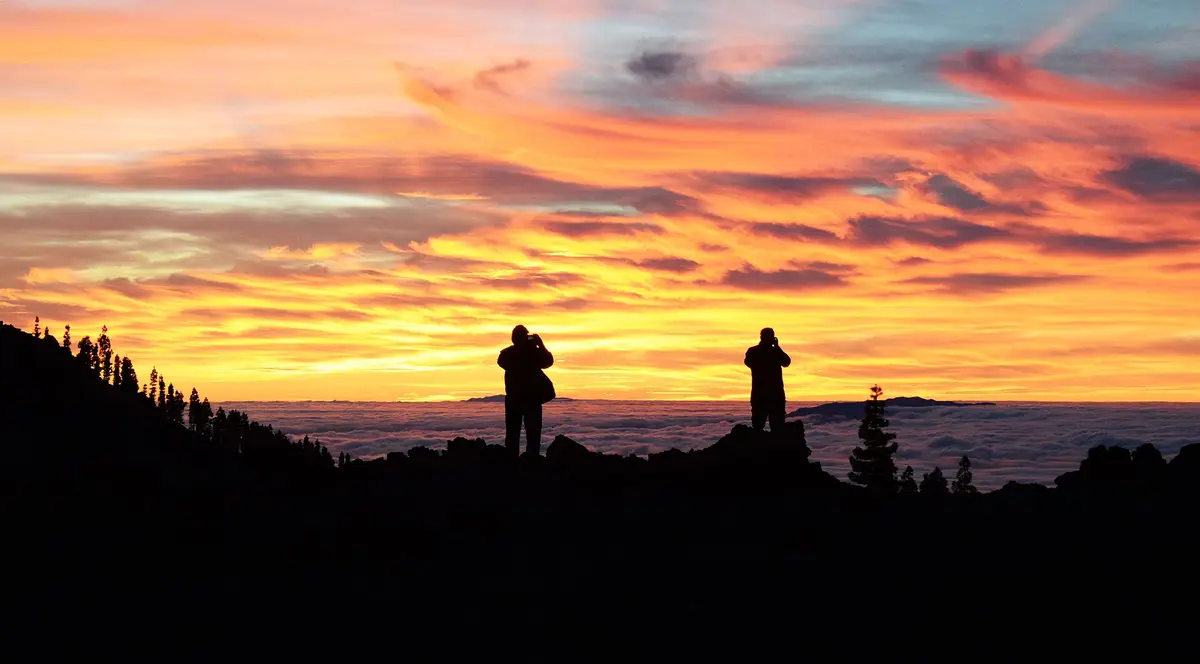
Teide is not only a daytime landscape. Tenerife's altitude and position make the high mountain an obvious place to spend an evening looking at the sky, and stargazing is one of the island's strongest bookable night experiences.
The main decision is whether to drive independently or join a guided astronomy tour.
Why stargaze around Teide?
At altitude you are farther from the brightest coastal resort lights, and the open volcanic landscape gives broad horizons.
A clear night can turn the mountain into a completely different experience from the daytime park.
That does not mean every night is perfect. Cloud, wind, dust, moonlight and changing mountain weather all affect what you see.
Guided stargazing tours
A guided tour is the easiest option for most first-time visitors.
The value comes from:
- transport from or near your resort;
- avoiding mountain driving at night;
- telescopes or other equipment;
- an astronomy guide;
- a structured observing session;
- sometimes a sunset stop before darkness.
This is one of the few Tenerife activities where interpretation can materially change the experience.
Independent stargazing
Driving yourself gives you freedom, but you need to be comfortable with:
- dark mountain roads;
- large temperature changes;
- choosing a safe and legal stopping place;
- checking current road and weather conditions;
- bringing suitable clothing and lighting.
Do not stop in unsafe road positions simply because a viewpoint looks dark.
If you have already spent the day in Teide National Park, consider whether you actually want to stay at altitude until late or would rather return to the coast and take a separate evening tour.
What to wear
The most common mistake is dressing for the hotel rather than the mountain.
Even when the coast is warm, a stationary evening at high altitude can feel cold. Bring layers and closed footwear. In winter, plan more conservatively.
A tour operator should tell you what clothing is appropriate, but you are still responsible for arriving prepared.
Moon phase and expectations
A bright moon can reduce how dramatic the faintest stars and Milky Way detail appear, but it does not make the entire experience pointless.
If your priority is deep-sky viewing or dark-sky photography, moon phase matters more.
If your priority is learning constellations and using a telescope with a guide, there can still be plenty to see.
Sunset plus stargazing
Combined sunset-and-stars excursions are popular because they turn transport into one coherent evening.
They work especially well if:
- you have already seen Teide by day;
- you want photography around sunset;
- you do not want to drive back in darkness;
- you are happy with a late finish.
The main downside is duration. Hotel pickup routes can make the total experience considerably longer than the observing session itself.
Weather cancellations
A responsible operator should have a clear policy for poor observing conditions.
Before booking, check:
- whether the tour runs in partial cloud;
- what happens if the mountain roads close;
- whether you receive a refund, reschedule or alternative;
- whether the astronomy part can move to another location.
Do not assume coastal sunshine means clear mountain skies after dark.
Can you combine stargazing with the cable car?
Possibly, depending on the exact product and current operating arrangements.
Do not assume an evening stargazing tour includes daytime cable-car access or any summit permission. Treat the cable car, high-altitude hiking and astronomy as separate components unless the booking explicitly combines them.
See Teide tours for the daytime excursion comparison.
Best bases for a stargazing tour
The southern resorts are convenient because many excursions collect around major hotel areas.
Costa Adeje and Los Cristianos are therefore easy bases.
You can also visit from Puerto de la Cruz, but compare pickup logistics before booking.
Is Teide stargazing worth it?
It is most worthwhile if you value one of three things:
- astronomy interpretation;
- avoiding night driving;
- experiencing Teide after the daytime crowds and heat have changed.
If you only want to see a dark sky for a few minutes and are already a confident mountain driver, an organized tour may be unnecessary.
For a one-week trip, stargazing fits well after a lighter daytime schedule rather than after a physically demanding hiking day.
Return to best tours in Tenerife for other bookable experiences or use the one-week itinerary to place the evening in context.
Photography and expectations
If photography is important, decide whether your priority is the stars themselves, a portrait under the night sky or simply documenting the experience. Those goals require different equipment and patience.
A guided astronomy tour is not automatically a photography workshop. Ask before booking if tripods, long exposures or dedicated camera time matter to you.
For most visitors, the strongest experience is to spend less time looking at a screen and more time listening to the guide and watching the sky adapt as your eyes become accustomed to the darkness.
Keep planning
Build the rest of your Tenerife trip
Use the core planning guides to connect where you stay, what you do and the day trips that are worth the travel time.