Tenerife travel guide
Surfing in Tenerife: Best Areas for Beginners and Experienced Surfers
Plan surfing in Tenerife with guidance on south vs north waves, beginner lessons, Playa de las Américas, El Médano, reef breaks and choosing a surf school.
Tenerife is a year-round surfing destination with a wide range of breaks, from more approachable southern waves to powerful volcanic-reef conditions in the north and north-west.
For first-time visitors, the most important decision is not which beach appears on a “best surf spots” list. It is whether the break matches your ability.
Beginners should choose a lesson and a suitable beach. Experienced surfers can use local forecasts and specialist knowledge to decide where conditions are right on the day.
Is Tenerife good for surfing?
Yes.
Official Tenerife tourism information highlights surfing and bodyboarding around the island and notes that the coastline includes:
- sandy bottoms;
- rock-and-sand breaks;
- volcanic reef;
- waves for different ability levels.
The island's varied exposure means different coasts work under different swell and wind patterns.
That is useful for experienced surfers but can make independent site selection confusing for beginners.
Surfing in the south
The south and south-west have several established surf areas and schools.
Playa de las Américas is one of the best-known centres because you have:
- multiple breaks;
- surf shops;
- schools;
- accommodation close by;
- year-round tourism infrastructure.
Some local reef breaks are not beginner locations.
Do not paddle out simply because a break is beside the resort.
A surf school can direct beginners to the safest suitable conditions.
El Médano
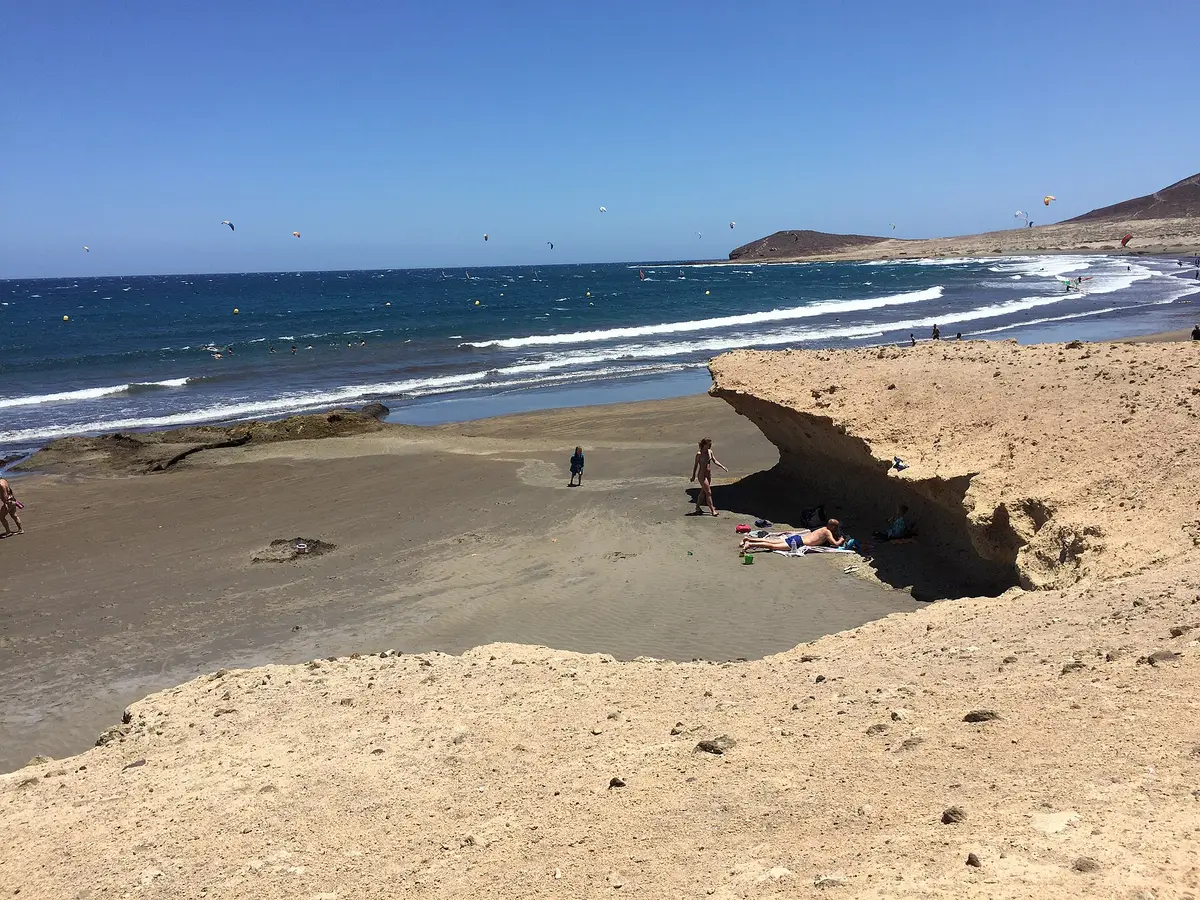
El Médano is famous for wind sports and has a strong board-sports culture.
The wider area includes surfing, windsurfing and kitesurfing conditions.
Wind can be an advantage for some sports and a disadvantage for clean beginner surf.
If conventional surfing is your priority, ask a school where conditions suit your level rather than assuming the main El Médano beach is always the correct spot.
North and north-west
Official tourism information describes the north and north-west as having some of the island's more powerful waves.
This makes the area attractive to experienced surfers.
It also means:
- stronger swell;
- more demanding entries;
- reef hazards;
- less margin for beginners.
If you do not know the spot, local advice matters.
Beginners
A lesson is the right starting point for most first-time surfers.
A good beginner lesson should include:
- suitable board;
- wetsuit if needed;
- beach/safety briefing;
- instruction on currents and etiquette;
- a spot chosen for the day's conditions.
Do not book only by the shortest walking distance from the hotel.
The school should move or adjust the plan when sea conditions are unsuitable.
Intermediate surfers
Intermediate surfers often get the most value from local guidance because they can use a broader range of breaks but may not understand Tenerife's reefs.
Ask about:
- bottom type;
- tide;
- entry and exit;
- local crowd;
- ideal swell direction;
- hazards.
A wave that looks manageable from shore can break differently over volcanic reef.
Experienced surfers
Experienced surfers can find powerful reef breaks across Tenerife.
Official tourism material identifies many sites by:
- swell direction;
- wind direction;
- tide;
- technical level.
Use that information with live conditions.
Respect local surf etiquette and do not treat heavily used breaks like an empty holiday attraction.
Do you need a permit?
Official Tenerife tourism information states that normal surfing does not require a special permit.
That does not remove normal restrictions around:
- protected areas;
- dangerous conditions;
- event zones;
- local closures.
Follow signs and local authority instructions.
Water temperature
Tenerife's sea is relatively mild year-round, but wetsuit choice depends on:
- season;
- session length;
- personal cold tolerance.
Surf schools normally advise on current equipment.
If you are renting, use their local recommendation rather than packing a heavy suit based only on a generic Atlantic assumption.
Surf school checklist
Compare:
- qualified instructors;
- beginner-to-instructor ratio;
- equipment included;
- transport if the school moves spots;
- lesson duration;
- insurance arrangements;
- cancellation due to conditions;
- clear level assessment.
A school that cancels or moves a lesson because conditions are poor is making a responsible decision.
Surfing and accommodation
If surfing is one of several activities, stay in a broader base such as Los Cristianos or Playa de las Américas.
If board sports are a major purpose of the trip, El Médano may suit you better.
For north-coast surfing, Puerto de la Cruz can reduce some driving but does not place you beside every break.
Surfing with non-surfers
A mixed group can make the activity easier by choosing a surf base with:
- beach;
- cafés;
- promenade;
- other activities.
Playa de las Américas and El Médano both work well because non-surfers are not stranded at an isolated reef.
Surfing vs snorkelling
Choose surfing if you want an active sport and are comfortable learning in waves.
Choose snorkelling for an easier surface-based marine activity.
Choose diving for underwater exploration rather than wave riding.
A one-week trip rarely needs all three unless water sports are the main purpose.
How many sessions?
For a complete beginner, one lesson tells you whether you enjoy the sport.
Two or three sessions give more chance to progress.
Do not fill the entire week before trying the first lesson.
Book the first session, then add more if conditions and interest justify it.
Weather and swell
A sunny day can still have unsuitable surf.
Conversely, cloud does not automatically make a surf day poor.
Surfing depends on:
- swell;
- wind;
- tide;
- local break geometry.
Use a real surf forecast and local school advice.
Best fit in a one-week trip
Put a lesson on a flexible coastal day.
It pairs well with a relaxed beach afternoon, not a long Teide drive.
If surfing is only one experience, a south-coast lesson is easiest for most first-time visitors.
For the destination decision, see El Médano and Playa de las Américas.
Keep planning
Build the rest of your Tenerife trip
Use the core planning guides to connect where you stay, what you do and the day trips that are worth the travel time.