Tenerife travel guide
Snorkelling in Tenerife: Where and How to Plan It
Plan snorkelling in Tenerife with advice on the best coast types, guided tours, sea conditions, safety and when diving may be the better choice.
Snorkelling in Tenerife is a good way to add a marine activity to a one-week trip without committing to a full scuba course.
The island's volcanic coast creates rocky entries, coves, reefs and clear-water areas, but conditions vary enough that the best snorkelling spot is often the one that is safe and calm on the day.
Do not choose only by a photograph.
Is Tenerife good for snorkelling?
Yes, especially for travellers who enjoy rocky volcanic coastlines and marine life rather than expecting a continuous tropical coral reef.
Turismo de Tenerife highlights several coastal areas where transparent water supports snorkelling and diving.
The island's marine environment can include:
- colourful fish;
- rays;
- turtles;
- volcanic rock formations;
- caves and ledges.
Wildlife is never guaranteed.
South and south-east coast
The south and south-east are popular because they are convenient for the main resort areas.
Places around Costa Adeje, Los Cristianos, Las Galletas, Abades and Montaña Amarilla are commonly associated with water activities.
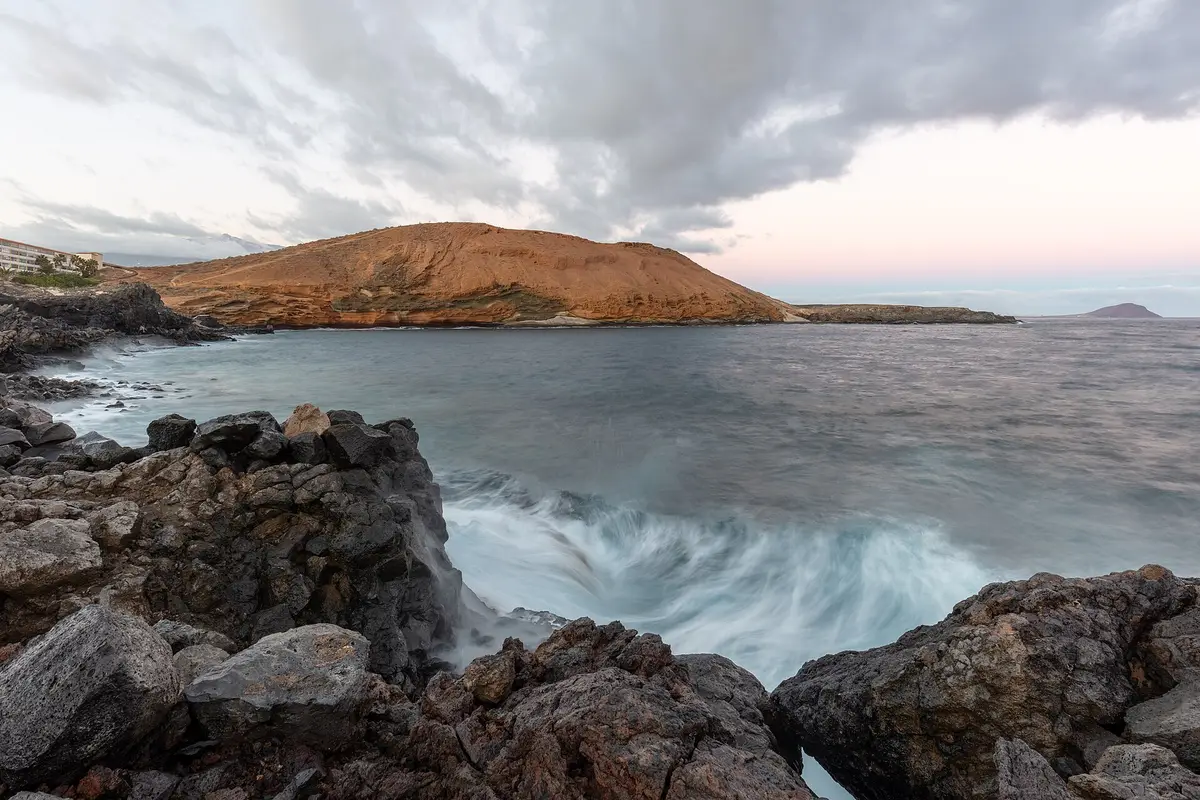
Montaña Amarilla is specifically promoted by Tenerife's tourism authority for clear water where snorkelling and diving are common.
Rocky entries mean footwear and sea conditions matter.
West coast
The west coast can provide good visibility and dramatic volcanic scenery.
It also works well for guided kayak-and-snorkel combinations.
If you are already planning Los Gigantes or a boat trip, marine activities can fit naturally into the same part of the week.
North coast
The north has attractive rocky pools and coves, but the Atlantic can be more exposed.
Some natural pools are suitable only in particular tide and sea conditions.
Do not assume a protected-looking rock pool is always safe.
Follow local signs and do not enter if waves are breaking strongly across the access.
Guided snorkelling or independent?
Independent snorkelling works well when:
- the entry is easy;
- conditions are calm;
- you know your ability;
- the site is familiar;
- you have suitable equipment.
A guided trip is better when:
- you want a boat or kayak;
- entry points are unfamiliar;
- you want help identifying marine life;
- children or beginners need supervision;
- local conditions are difficult to judge.
For a first trip, paying for one guided marine session can be more useful than buying equipment and guessing at sites.
Snorkelling from a boat
Some boat trips in Tenerife include a swim or snorkel stop.
Read the description carefully.
A leisure cruise with ten minutes in the water is not the same experience as a dedicated snorkelling trip.
Check whether:
- equipment is included;
- guides enter the water;
- the stop depends on sea conditions;
- flotation aids are available;
- the site is chosen for snorkelling rather than convenience.
Equipment
Basic snorkelling needs:
- well-fitting mask;
- snorkel;
- fins if appropriate;
- sun protection;
- thermal protection when needed.
A mask that leaks continuously can ruin the experience.
If you are renting gear, take time to check fit before entering the water.
Sea temperature and comfort
Tenerife's water is usable year-round for many people, but comfort varies by season and person.
A short summer snorkel and a long winter session are different.
A wetsuit can make a guided trip more comfortable, especially if you are in the water for an extended period.
Currents and waves
This is the main safety issue.
Do not judge the sea only by the entry point.
A calm cove can have movement outside it, and rocky coastlines can make exits difficult if swell increases.
Use lifeguarded or guided locations when you are unsure.
Never snorkel alone in unfamiliar conditions.
Turtles and wildlife
Turtles are one reason visitors book snorkelling and diving experiences.
Treat wildlife sightings as a possibility, not a guaranteed product.
Do not chase, touch or block animals.
A responsible guide should prioritize distance and natural behaviour over close-up photographs.
Families
Snorkelling can work well with older children who are confident swimmers.
For younger children, shallow protected swimming may be better.
A guided family session can reduce uncertainty around equipment, entry and conditions.
Do not assume a child who is comfortable in a pool will be equally relaxed in open Atlantic water.
Snorkelling vs diving
Choose snorkelling if you want:
- low commitment;
- surface-based activity;
- no certification;
- a short marine experience.
Choose diving in Tenerife if you want:
- deeper sites;
- volcanic formations underwater;
- longer marine encounters;
- wrecks or more technical environments.
Beginners can also try an introductory dive through an authorized centre.
Best place in a one-week itinerary
Use snorkelling on a flexible coastal day.
Do not schedule it immediately after a long mountain excursion if the group is tired.
A strong marine day could be:
- morning snorkelling;
- lunch;
- beach afternoon.
Alternatively, combine it with a west-coast boat day.
Booking checklist
Before paying, check:
- exact entry or departure point;
- group size;
- equipment;
- wetsuit availability;
- guide-to-guest ratio;
- minimum swimming ability;
- cancellation policy;
- what happens if sea conditions change.
The best snorkelling experience is the one that matches the sea on the day.
For a broader water-activity comparison, see diving in Tenerife and best tours in Tenerife.
Keep planning
Build the rest of your Tenerife trip
Use the core planning guides to connect where you stay, what you do and the day trips that are worth the travel time.