Tenerife travel guide
Tenerife Weather: North, South and Mountain Microclimates
Understand Tenerife weather by region, including south vs north, Teide altitude, winter conditions, trade winds and how to plan weather-sensitive days.
The most important fact about Tenerife weather is that one forecast does not describe the whole island.
Tenerife's mountains, altitude and trade winds create strong microclimates.
You can leave a sunny south-coast hotel, drive through cloud in the north and reach cold, exposed conditions around Teide on the same day.
That variation is part of the island's appeal, but it matters when you plan a one-week itinerary.
South Tenerife weather
The south is generally drier and sunnier than the north.
This is why Costa Adeje, Los Cristianos and Playa de las Américas dominate the winter-sun market.
For travellers whose first priority is:
- beach time;
- pool days;
- predictable outdoor resort weather;
the south is the strategic base.
This does not mean every day is cloudless or wind-free.
It means the odds are generally better than in the greener north.
North Tenerife weather
The north is more exposed to moist trade winds.
That creates:
- more cloud;
- higher humidity;
- more rainfall;
- greener vegetation.
Puerto de la Cruz can therefore look completely different from the south on the same day.
This is not automatically “bad weather.”
It is the climate that supports the lush landscapes many travellers come to see.
Teide weather
Teide National Park must be treated as a mountain environment.
Do not use the Costa Adeje forecast to decide what to wear.
At altitude you can experience:
- much lower temperatures;
- strong sun;
- wind;
- snow or ice in winter;
- rapidly changing conditions.
Bring layers even when you leave the coast in shorts.
For controlled hikes, check current Tenerife ON conditions and access rules.
Anaga weather
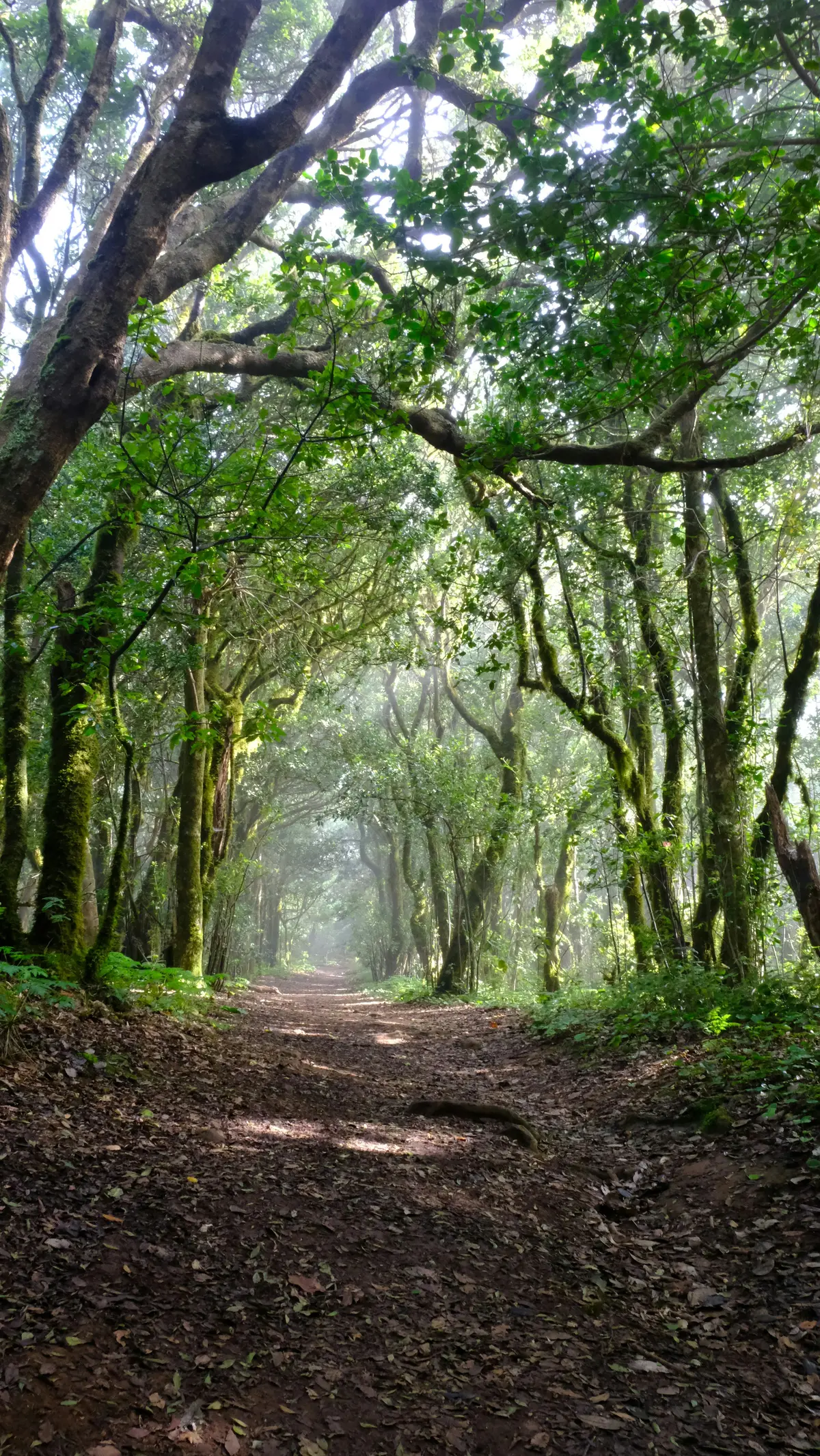
Anaga Rural Park is often cloudier and wetter than the southern resorts.
Mist and low cloud can be atmospheric in the laurel forest.
Heavy rain and poor visibility are different.
If you are hiking, check local conditions and choose a route suitable for wet ground.
A day that is not ideal for a beach may still be excellent for a short forest walk.
Trade winds
The north-east trade winds are a major part of Tenerife's climate.
They bring moisture toward the northern slopes, where the mountains help create cloud and greener vegetation.
The high ground also shelters much of the south, helping explain the island's north-south contrast.
This is why weather can change over surprisingly short distances.
Winter weather
Winter is one of Tenerife's strongest travel seasons.
The coast remains much milder than northern Europe, especially in the south.
However:
- evenings can feel cool;
- wind changes comfort;
- northern cloud is common;
- Teide can be genuinely wintry.
See Tenerife in winter for the trip-planning version of the climate story.
Spring
Spring works well for mixed itineraries.
It is usually easy to combine:
- walking;
- beaches;
- town visits;
- mountain days.
The important variable is still region rather than calendar alone.
Summer
Summer is strongest for straightforward beach weather.
Lower elevations can feel hot in direct sun, so long hikes should be planned with exposure and water in mind.
Teide remains a separate high-altitude environment even when the coast is hot.
Autumn
Autumn is a strong transition season.
Sea temperatures retain summer warmth while hiking and sightseeing can become more comfortable.
Later autumn also begins the island's main winter-sun period.
Calima
Tenerife can occasionally experience calima, when dust from the Sahara affects the Canary Islands.
Conditions can become hazy and air quality may worsen.
If a calima event is active, follow current official health and weather guidance rather than relying on a normal sunshine forecast.
Do not schedule demanding outdoor activity simply because rain probability is low.
Rain
Rainfall is not evenly distributed.
The north and higher terrain receive more moisture than the dry south coast.
A short shower in one region does not mean the whole island has a washout day.
For a road trip, check each planned area separately.
Wind
Wind can matter more than temperature for:
- beaches;
- boat trips;
- Teide;
- exposed viewpoints;
- water activities.
A mild day can feel uncomfortable in strong wind.
Marine excursions may also change or cancel routes because sea state matters more than whether the sky is sunny.
How to use weather forecasts
Do not search only for “Tenerife weather.”
Check:
- your resort;
- Teide;
- Anaga;
- the specific north-coast town;
- marine conditions for boat days.
Use current official or reputable forecasts close to the day.
A seven-day forecast is useful for broad planning, not a fixed guarantee.
Build weather flexibility into one week
The best Tenerife itinerary has one or two flexible days.
If Teide looks poor on Tuesday but good on Thursday, move it.
If the sea is rough for whale watching, use the day for a town or beach.
This flexibility matters more than finding a mythical month with perfect island-wide weather.
What to pack
Even for a beach holiday, bring:
- a light jacket;
- warmer Teide layers;
- sun protection;
- suitable walking shoes;
- a light waterproof layer if exploring the north.
Our Tenerife packing list turns this into a full checklist.
Weather and base choice
If sun is your top priority, choose the south.
If greenery, hiking and town atmosphere matter more, the north is still attractive.
If you want both, stay south and plan two or three northern days — or split the trip.
See north vs south Tenerife for the full accommodation decision.
Keep planning
Build the rest of your Tenerife trip
Use the core planning guides to connect where you stay, what you do and the day trips that are worth the travel time.